Subscribe to our newsletter today
Lorem ipsum dolor sit amet consectetur adipiscing eli mattis sit phasellus mollis sit aliquam sit nullam.


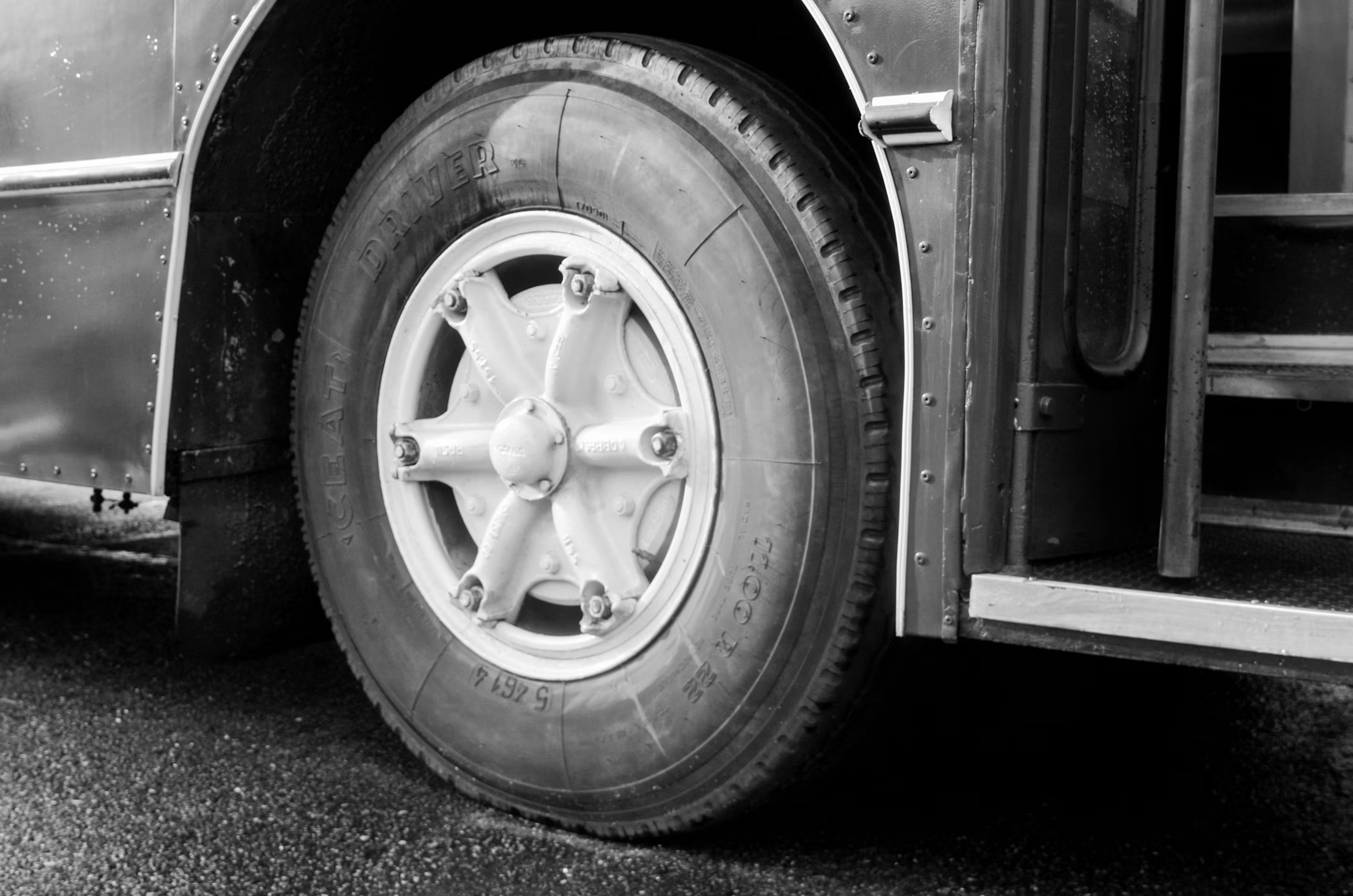
RV tire safety in extreme weather — how heat and cold affect tire pressure and performance, desert driving rules, winter driving rules, what to do during a blowout, and the maintenance habits that prevent emergencies.
Venenatis sollicitudin posuere elit consequat et enim. Neque tortor amet dictum tempor. Leo facilisis aliquet viverra scelerisque eleifend viverra est. At massa erat vel amet enim laoreet dictum pellentesque. Urna cursus quam pulvinar tellus. Duis fermentum nibh volutpat morbi. Et ac sed ultricies ut nunc sodales lectus.
Et urna ac et maecenas fusce amet. Nibh nec commodo massa sed. Tincidunt porttitor in pharetra egestas sit neque ac lacus. Amet a nunc et cum. Odio at volutpat volutpat in leo eget ipsum diam elementum. Erat magna arcu orci lorem senectus orci fringilla. Tincidunt metus nisl vitae maecenas pretium aliquet.
Quis faucibus massa sit egestas. Sit fermentum est ac pulvinar et sagittis sed sit ut. Quis faucibus aenean nibh vestibulum enim mi sit. Sollicitudin ultrices ultrices in ipsum urna fringilla massa leo. Sapien ultricies vitae rhoncus molestie purus. Urna urna dolor euismod porttitor et. Magna adipiscing dictum et adipiscing mollis feugiat.

Quis faucibus massa sit egestas. Sit fermentum est ac pulvinar et sagittis sed sit ut. Quis faucibus aenean nibh vestibulum enim mi sit. Sollicitudin ultrices ultrices in ipsum urna fringilla massa leo. Sapien ultricies vitae rhoncus molestie purus. Urna urna dolor euismod porttitor et. Magna adipiscing dictum et adipiscing mollis feugiat.
Cursus curabitur euismod vel fermentum sapien non dolor odio vel. Tortor lectus mauris in praesent a tincidunt nam. In aenean odio aliquet pretium viverra elit quis magna. Eget ut risus posuere velit purus nisi nec sollicitudin. Tellus enim interdum neque sit vestibulum lacus. Nam pulvinar a lectus justo aliquet integer amet.
“Sed id mi eget urna facilisis pharetra nunc viverra est at magna maximus consectetur sed nec maximus augue aliquam commodo sem eu.”
Cursus curabitur euismod vel fermentum sapien non dolor odio vel. Tortor lectus mauris in praesent a tincidunt nam. In aenean odio aliquet pretium viverra elit quis magna. Eget ut risus posuere velit purus nisi nec sollicitudin. Tellus enim interdum.
Sed non quis tellus velit orci. Quam sed mauris elementum tempor viverra. Luctus semper risus ipsum id diam praesent. Pretium eget mauris ultrices curabitur sed sem amet. Erat nulla habitant in mattis massa mi adipiscing ullamcorper condimentum. Erat quisque integer tincidunt ac amet tempor vulputate tristique.
Sed non quis tellus velit orci. Quam sed mauris elementum tempor viverra. Luctus semper risus ipsum id diam praesent. Pretium eget mauris ultrices curabitur sed sem amet. Erat nulla habitant in mattis massa mi adipiscing ullamcorper condimentum. Erat quisque integer tincidunt ac amet tempor vulputate tristique.
Sed non quis tellus velit orci. Quam sed mauris elementum tempor viverra. Luctus semper risus ipsum id diam praesent. Pretium eget mauris ultrices curabitur sed sem amet. Erat nulla habitant in mattis massa mi adipiscing ullamcorper condimentum.
Your RV tires are the only thing between 20,000 pounds of rig and the road. Everything else — the engine, the brakes, the suspension — depends on four to six patches of rubber about the size of a sheet of paper maintaining contact with the pavement. When those patches fail, everything fails.
Extreme weather is when tires fail. Not on mild spring days on flat highways — on 110°F desert asphalt in July, on frozen mountain passes in January, on the long downhill grades where heat builds in the tire faster than it can dissipate. The blowouts that destroy rigs, roll coaches, and end trips happen disproportionately in extreme conditions.
Understanding what heat and cold do to your tires — and what to do about it — is one of the most important safety investments you can make as an RV owner.
The basics: how tires work in extreme temperatures
Tires are not static objects. They're dynamic — the rubber compounds, the steel belts, the nylon cords, and the air inside all respond to temperature in ways that directly affect performance and safety.
Tire pressure and temperature are directly linked. For every 10°F change in ambient temperature, tire pressure changes approximately 2 PSI. Temperature goes up, pressure goes up. Temperature goes down, pressure goes down. This relationship is predictable and manageable — but only if you know it's happening and check accordingly.
Heat is the primary enemy of tire longevity. Every tire has a heat threshold beyond which the rubber compounds begin to break down — the chemical bonds that give the rubber its strength and elasticity degrade under sustained high heat. This process is cumulative and irreversible. A tire that has been run hot multiple times has less structural integrity than a tire that hasn't, even if both look identical from the outside.
Cold reduces traction and increases the risk of underinflation damage. Cold rubber is less flexible than warm rubber — it takes longer to reach optimal operating temperature and provides less grip during that warmup period. Cold also causes significant pressure loss that many RV owners don't account for when checking tires in a heated garage before a winter trip.
Heat: the desert highway threat
Driving through the American Southwest in summer — Death Valley, Highway 395, the I-10 corridor through Arizona and New Mexico, Highway 95 through Nevada — puts RV tires in conditions they were tested for but rarely experience all at once: extreme ambient heat, hot pavement, heavy load, and sustained highway speeds for hours at a time.
What happens to a tire in extreme heat:
Pressure increases — as the tire heats up from both ambient temperature and the friction of rolling, the air inside expands and pressure increases. A tire set to the correct cold inflation pressure at 70°F may be running 10–15 PSI higher after an hour of desert highway driving at 100°F ambient temperature. This is normal and expected — it's why you set cold inflation pressure and leave it alone while driving.
The danger zone — where it gets critical is when the tire pressure increases beyond the maximum load rating of the tire, or when the tire is underinflated to begin with and the heat pushes it into the operating range while masking the underinflation. An underinflated tire running in the desert looks adequately inflated when hot — but the structural damage from running underinflated is already happening.
Heat buildup in the tire carcass — beyond the air pressure issue, the rubber itself heats up through the repeated flexing of the sidewall as the tire rotates. An underinflated tire flexes more than a properly inflated tire — more flex means more heat buildup means faster rubber degradation means higher blowout risk. This is the primary mechanism of heat-related RV tire failures.
Pavement temperature — ambient air temperature and pavement temperature are not the same. On a 100°F day the black asphalt pavement surface can reach 150–165°F. The bottom of your tire contacts that surface continuously. The heat transfers up through the tire from the contact patch while heat also builds from the inside from friction and flexing — creating heat stress from both directions simultaneously.
Heat safety rules for desert driving
Rule 1: Set tire pressure correctly before you leave — and don't adjust it while hot
Set your tire pressure cold — before the rig has been driven and before the sun has been on the tires for more than an hour. Cold means the tires are at ambient temperature, not warmed up from driving.
Check your RV owner's manual or the placard inside the entry door for the correct cold inflation pressure for your specific rig at your specific load. This is not the maximum pressure printed on the tire sidewall — that's the maximum the tire can physically hold, not the correct operating pressure for your vehicle.
Never release pressure from a hot tire. A tire that reads high when hot is not overinflated — it's doing exactly what physics requires it to do. Releasing pressure from a hot tire leaves it dangerously underinflated when it cools down. This is a common mistake that creates the exact condition — underinflation — that causes the heat-related failures people are trying to prevent.
Rule 2: Know your load ratings and stay under them
Every RV tire has a load rating — the maximum weight it's designed to carry at its specified inflation pressure. RV tires are frequently overloaded, particularly on the drive axle of fifth wheels and the rear axle of Class A motorhomes where the heaviest items — water tanks, batteries, generator — concentrate the weight.
Weigh your rig. Not just the total weight on the CAT scale — the individual axle weights and ideally the individual corner weights. Many RVers are shocked to find one side of their rig significantly heavier than the other, or the rear axle at or near its rating when the fresh water tank is full.
RV Safety and Education Foundation (RVSEF) and many RV rallies offer individual wheel position weighing that gives you the most accurate picture of your load situation. It costs about $20 and provides information that changes how you manage your tires for the life of the rig.
In the desert in summer, reduce your load where possible. Travel with a partial fresh water tank rather than a full one. Be honest about whether you need every item in the basement storage. Every pound over the tire's load rating at operating temperature is risk.
Rule 3: Speed matters more than most people realize
Tire speed ratings are real. Most RV tires are rated for sustained speeds of 65–75 MPH. Running at 80 MPH — entirely normal on western interstates — generates significantly more heat in the tire than running at 65 MPH. The relationship between speed and heat buildup is not linear — doubling the speed more than doubles the heat generated.
In the desert in summer, 62–65 MPH is the right highway speed for tire longevity and safety. It feels slow on an empty Nevada highway. It's the correct call.
Rule 4: Take breaks on long desert drives
Continuous running at highway speed in extreme heat builds heat in the tire carcass continuously. Stopping for 30–45 minutes allows the tires to dissipate heat before the next leg.
Plan your desert summer driving schedule around the temperature. Start early — be on the road by 6am and plan to be stopped or significantly slower by noon. The pavement temperature at 6am is dramatically lower than at 2pm. The difference in tire stress between a morning drive and an afternoon drive in July in the Southwest is significant.
Rule 5: Use a tire pressure monitoring system
A Tire Pressure Monitoring System (TPMS) is not a luxury item for RV owners — it's essential equipment for any rig that travels in extreme conditions. A TPMS sends real-time pressure and temperature readings from each tire to a cab display, alerting you immediately to any pressure drop or temperature spike before it becomes a blowout.
A slow leak that drops pressure 5 PSI over 30 minutes is imperceptible from the driver's seat. A TPMS catches it immediately. The $150–$400 cost of a quality TPMS is trivial compared to the cost of a blowout — and far less than the cost of a rollover.
Rule 6: Inspect your tires before every desert drive
Walk your tires before you pull out in the morning. Look for:
Rule 7: Know your tire age
Tire age matters independently of tread depth. The rubber compounds in a tire degrade with time regardless of how much the tire has been driven — a 7-year-old tire with good tread is more dangerous than a 3-year-old tire with the same tread because the internal rubber has been degrading through heat cycles for four more years.
The tire industry and most RV safety organizations recommend replacing RV tires at 5–7 years regardless of tread depth. The date code is molded into the sidewall — a 4-digit code where the first two digits are the week and the last two are the year. A tire marked 2319 was manufactured in the 23rd week of 2019.
In the desert Southwest, where UV exposure is extreme and summer temperatures are brutal, erring toward the 5-year replacement end of the range is the right call.
Cold: the winter driving threat
Cold weather tire failure looks different from heat failure. Cold doesn't cause blowouts — it causes gradual underinflation, reduced traction, increased stopping distances, and the conditions for tire damage on frozen or deteriorated road surfaces.
What happens to a tire in extreme cold:
Pressure drops significantly — at 0°F, a tire that was set to the correct pressure at 70°F has lost approximately 14 PSI. A tire set to 80 PSI in a heated garage the night before is running at approximately 66 PSI on a cold January morning. For a load-bearing RV tire that may be at 75% of its load rating at correct inflation, 14 PSI underinflation is a serious safety concern.
Rubber stiffens — cold rubber is less flexible than warm rubber. In extreme cold, below 20°F, rubber compounds stiffen to the point where traction is meaningfully reduced and the tire takes significantly longer to reach its operating temperature and full flexibility. The first miles of a cold-weather drive are the highest risk for traction-related incidents.
Flat spotting — a tire that sits in extreme cold in one position develops a temporary flat spot on the contact patch as the rubber stiffens in the compressed shape. This causes a rhythmic thumping for the first few miles until the tire warms and the rubber becomes flexible again. Flat spotting is usually temporary but severe cold and extended stationary periods can cause more persistent deformation in older tires.
Ice, snow, and road debris — winter roads present physical hazards that dry desert highways don't. Ice in tire grooves, snow packed into tread, and the debris that road treatment chemicals kick up all interact with the tire differently than clean dry pavement.
Cold safety rules for winter driving
Rule 1: Check pressure cold — and check it correctly
Check tire pressure every morning before driving in cold weather — not in the heated garage, not after the tires have been in the sun, but outside in the ambient temperature the rig has been sitting in.
Carry a quality digital tire pressure gauge — the pencil-style gauges that come with air compressor kits are not accurate enough for safety-critical tire pressure checks. A quality digital gauge reads to 0.5 PSI accuracy and provides consistent readings.
Have a target pressure for cold conditions. If your correct operating pressure is 80 PSI at 70°F ambient, your target cold pressure on a 10°F morning should account for the pressure increase that will occur as the tires warm to operating temperature. Your tire dealer or RV manufacturer can provide guidance on cold-weather target pressures for your specific tires and load.
Rule 2: Allow warmup time
Don't push immediately to highway speed on a cold morning. Start slowly and allow the tires to flex and warm over the first few miles. Tires reach optimal operating temperature and flexibility after approximately 5–10 miles of normal driving — during that warmup period treat them gently.
On icy or snowy surfaces this warmup consideration is critical — cold stiff tires on slippery surfaces with abrupt inputs (hard braking, sharp steering) are the conditions for loss of control.
Rule 3: Know your tires' cold weather limits
Standard RV tires are not winter tires. They're all-season or highway-rated tires that perform adequately in light snow and cold conditions but have real limitations in severe winter conditions — deep snow, ice, and sustained temperatures well below 0°F.
If you're driving through mountain passes, across northern plains states in January, or in any environment where severe winter conditions are expected, know your tire's limits before you're in the middle of those conditions.
Chains — some mountain passes require chains or traction devices in winter conditions. Carry chains appropriate for your tire size and know how to install them before you need to. Installing tire chains for the first time on the shoulder of a mountain pass in the dark in a snowstorm is not the moment to learn the process.
Rule 4: Inspect for cold-weather damage
Cold-weather driving creates specific tire damage patterns:
Sidewall cracking — existing cracks in tire sidewalls open further in cold temperatures as the rubber contracts and stiffens. A tire with minor sidewall cracking that was acceptable in summer conditions may be at risk in extreme cold.
Impact damage — potholes in cold weather are more dangerous than in warm weather. Frozen road surfaces don't compress at all — the impact energy transfers entirely into the tire and wheel. Hitting a pothole at highway speed on a frozen road can damage the tire bead, crack the wheel, or cause immediate deflation. Slow down on roads with known pothole problems in cold weather.
Valve stem damage — rubber valve stems become brittle in extreme cold and are vulnerable to damage from road debris and ice. Metal valve stems with caps are more resistant to cold-weather damage. Check your valve stems as part of your cold-weather tire inspection.
Rule 5: Understand winter storage tire care
If you're storing your RV through winter rather than driving it, tires still need attention.
Tire pressure during storage — inflate to the maximum sidewall pressure for storage periods. The pressure will drop over the storage season as the air slowly permeates the rubber — starting at maximum gives the most margin.
Tire covers — UV exposure damages tire sidewalls even in winter months. Cover your tires with UV-resistant tire covers for any extended storage period.
Move the rig periodically — if possible, move the rig forward or back a few feet every 30–60 days during storage to prevent flat spotting from the tire sitting in one position under load for extended periods.
Jack stands for extended storage — for storage periods longer than 3–4 months, some RV owners use jack stands to take the weight off the tires entirely. This prevents flat spotting and reduces the stress on the tire carcass during the storage period. Ensure the rig is secured properly and the stands are rated for the weight before doing this.
The blowout — what to do when it happens
Despite every precaution, blowouts happen. Knowing what to do in the first three seconds of a blowout is the difference between a roadside tire change and a rollover.
The instinct is wrong. When a tire blows, the instinct is to brake hard and steer away from the blowout. This is the wrong response — it transfers weight to the damaged corner of the rig, increases the probability of the rig going out of control, and can cause a rollover.
The correct response:
Practice this response mentally before you need it. The correct response runs entirely counter to instinct — knowing the right actions before a blowout happens means you're less likely to react instinctively in the wrong way.
After a blowout:
Tire maintenance that prevents emergencies
The best emergency response is the prevention that makes the emergency unnecessary.
Regular rotation — RV tires should be rotated every 6,000–8,000 miles or at least once per season. Uneven wear caused by imbalanced loads and alignment issues concentrates stress on specific sections of specific tires — rotation distributes that stress and extends tire life.
Alignment and balance — have your RV's alignment checked annually or any time you notice uneven wear. Misalignment causes accelerated wear and reduces the effective load capacity of affected tires. Wheel balance affects vibration and wear patterns and should be checked any time tires are rotated or replaced.
Visual inspections — walk your tires before every significant drive. The 5-minute pre-trip tire walk that finds a slow leak, a sidewall bulge, or an embedded screw saves the emergency roadside situation that ruins the day.
Keep a tire log — record the date code of each tire, the purchase date, mileage at purchase, rotation history, and any incidents. This log tells you when tires are approaching replacement age and provides documentation if a warranty claim is ever needed.
Gear for tire safety
Bottom Line
Tire safety in extreme weather is not complicated. It requires knowing how temperature affects pressure, checking pressure before every drive, staying within load ratings, slowing down in heat and on winter roads, and replacing tires at the right interval regardless of tread depth.
The RV owners who avoid tire failures are not lucky. They're consistent about the basics — cold pressure checks every morning, pre-trip visual inspections, TPMS running on every drive, and tires replaced on schedule rather than run until they look worn.
The desert highway and the mountain pass are unforgiving environments for a tire that isn't right. Make sure yours are.
Related reading: Top 10 RV Tires for 2026 → How to Winterize Your RV → RV Trip Checklist: 25 Must-Haves → The Rule of 3: RV Safety Guide →
Lorem ipsum dolor sit amet consectetur adipiscing eli mattis sit phasellus mollis sit aliquam sit nullam.