Subscribe to our newsletter today
Lorem ipsum dolor sit amet consectetur adipiscing eli mattis sit phasellus mollis sit aliquam sit nullam.
Arizona RV snowbird guide — Yuma, Quartzsite boondocking, Tucson, Sedona, Phoenix, the best winter RV parks, spring training baseball, desert hiking, and practical planning tips for a full winter season.
Venenatis sollicitudin posuere elit consequat et enim. Neque tortor amet dictum tempor. Leo facilisis aliquet viverra scelerisque eleifend viverra est. At massa erat vel amet enim laoreet dictum pellentesque. Urna cursus quam pulvinar tellus. Duis fermentum nibh volutpat morbi. Et ac sed ultricies ut nunc sodales lectus.
Et urna ac et maecenas fusce amet. Nibh nec commodo massa sed. Tincidunt porttitor in pharetra egestas sit neque ac lacus. Amet a nunc et cum. Odio at volutpat volutpat in leo eget ipsum diam elementum. Erat magna arcu orci lorem senectus orci fringilla. Tincidunt metus nisl vitae maecenas pretium aliquet.
Quis faucibus massa sit egestas. Sit fermentum est ac pulvinar et sagittis sed sit ut. Quis faucibus aenean nibh vestibulum enim mi sit. Sollicitudin ultrices ultrices in ipsum urna fringilla massa leo. Sapien ultricies vitae rhoncus molestie purus. Urna urna dolor euismod porttitor et. Magna adipiscing dictum et adipiscing mollis feugiat.

Quis faucibus massa sit egestas. Sit fermentum est ac pulvinar et sagittis sed sit ut. Quis faucibus aenean nibh vestibulum enim mi sit. Sollicitudin ultrices ultrices in ipsum urna fringilla massa leo. Sapien ultricies vitae rhoncus molestie purus. Urna urna dolor euismod porttitor et. Magna adipiscing dictum et adipiscing mollis feugiat.
Cursus curabitur euismod vel fermentum sapien non dolor odio vel. Tortor lectus mauris in praesent a tincidunt nam. In aenean odio aliquet pretium viverra elit quis magna. Eget ut risus posuere velit purus nisi nec sollicitudin. Tellus enim interdum neque sit vestibulum lacus. Nam pulvinar a lectus justo aliquet integer amet.
“Sed id mi eget urna facilisis pharetra nunc viverra est at magna maximus consectetur sed nec maximus augue aliquam commodo sem eu.”
Cursus curabitur euismod vel fermentum sapien non dolor odio vel. Tortor lectus mauris in praesent a tincidunt nam. In aenean odio aliquet pretium viverra elit quis magna. Eget ut risus posuere velit purus nisi nec sollicitudin. Tellus enim interdum.
Sed non quis tellus velit orci. Quam sed mauris elementum tempor viverra. Luctus semper risus ipsum id diam praesent. Pretium eget mauris ultrices curabitur sed sem amet. Erat nulla habitant in mattis massa mi adipiscing ullamcorper condimentum. Erat quisque integer tincidunt ac amet tempor vulputate tristique.
Sed non quis tellus velit orci. Quam sed mauris elementum tempor viverra. Luctus semper risus ipsum id diam praesent. Pretium eget mauris ultrices curabitur sed sem amet. Erat nulla habitant in mattis massa mi adipiscing ullamcorper condimentum. Erat quisque integer tincidunt ac amet tempor vulputate tristique.
Sed non quis tellus velit orci. Quam sed mauris elementum tempor viverra. Luctus semper risus ipsum id diam praesent. Pretium eget mauris ultrices curabitur sed sem amet. Erat nulla habitant in mattis massa mi adipiscing ullamcorper condimentum.
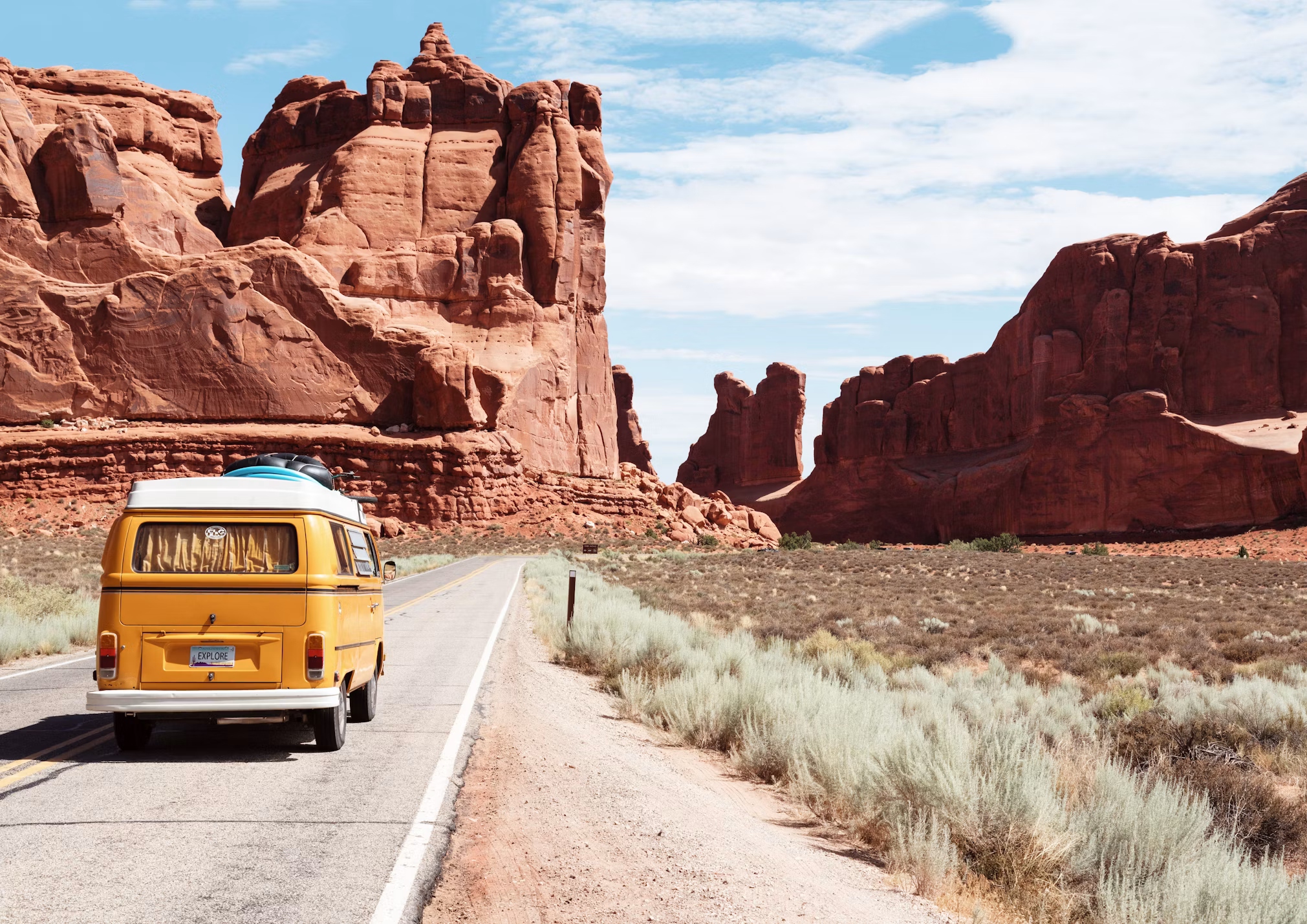
There's a reason Arizona is where serious snowbirding began. The Sonoran Desert in winter is one of the most beautiful landscapes in North America — saguaro cactus casting long shadows in the morning light, the sky a blue that doesn't exist in northern winters, temperatures in the 70s every afternoon from October through March. The hiking is extraordinary. The sunsets are legendary. And the RV community that concentrates here every winter is the most established and welcoming in the country.
Arizona doesn't just tolerate snowbirds. It's built around them.
When to go
October through April is the Arizona snowbird window. Peak season is December through February when the northern states are at their most brutal and the Arizona desert is at its most perfect — warm afternoons, cool nights, and almost no rain.
March and April bring the desert wildflower blooms — saguaro flowers in May, but the lower desert plants bloom earlier. The spring wildflower season in the Sonoran Desert in a good rain year is extraordinary.
May through September — not for snowbirds. Summer temperatures in the Phoenix and Yuma areas regularly exceed 110°F. The desert is beautiful year-round but summer is genuinely dangerous for outdoor activity and uncomfortable in any RV without exceptional air conditioning.
The destinations
Yuma — The snowbird capital
Yuma sits at the far southwestern corner of Arizona on the Colorado River — close enough to San Diego that the Pacific moderates the climate and keeps winter temperatures consistently warm. Average January high temperature: 68°F. Average lows: 42°F. Almost no rain December through April.
The approximately 90,000 snowbirds who arrive between October and April nearly triple Yuma's permanent population. The city is entirely oriented around the winter visitor — the RV park infrastructure is the most extensive of any city in the country, the medical facilities are scaled for winter population, and the social scene for snowbirds is unmatched anywhere.
The best areas in Yuma:
Foothills area — the nicest part of Yuma for snowbirds. Newer parks, better amenities, and easy access to shopping and restaurants. The Foothills area east of town along the Fortuna Foothills has an established snowbird community with walking paths, pickleball courts, and organized activities.
Along the Colorado River — several parks directly on the river with boat access and fishing. The river bottom vegetation creates a lush green corridor through the desert that's surprisingly beautiful.
Key parks in Yuma:
Fortuna de Oro RV Resort — one of the premier full-amenity resorts in Yuma. Pool, hot tub, pickleball, tennis, and a full social calendar. Books up months in advance for December-March.
Book on Campspot → [affiliate link]
Sun Vista RV Resort — excellent full-hookup resort in the Foothills area with strong community programming and easy access to shopping.
Book on Campspot → [affiliate link]
Yuma Mesa RV Park — a more affordable option near the Foothills with full hookups and good access to the city.
Book on Campspot → [affiliate link]
What to do in Yuma:
Yuma Territorial Prison State Historic Park — one of the best state parks in Arizona. The infamous territorial prison that operated from 1876 to 1909 — the original cell blocks, the guard tower, and the exhibits on prisoner life are excellent. The views of the Colorado River from the prison bluff are unexpectedly beautiful.
Imperial National Wildlife Refuge — north of Yuma along the Colorado River. One of the best birding sites in Arizona with over 300 species recorded. Winter brings waterfowl in significant numbers — Canada geese, snow geese, and dozens of duck species on the river and the backwater marshes.
Algodones, Mexico — just across the border from Yuma. A border town oriented entirely around the snowbird visitor — dental work, prescription medications, and eyeglasses at a fraction of US prices. Hundreds of thousands of snowbirds cross the border each winter for medical and dental services. The experience is safe, straightforward, and worth understanding before you need it.
Quartzsite — The legendary gathering
Quartzsite sits on Interstate 10 an hour northeast of Yuma — a tiny town of 3,500 permanent residents that becomes one of the largest communities in Arizona every January when hundreds of thousands of RVers converge for the gem and mineral shows and the general phenomenon of the winter gathering.
The numbers are staggering. The January Quartzsite Sports, Vacation & RV Show and the surrounding gem and mineral shows draw an estimated 1.5 million visitors. The BLM land surrounding the town fills with RVs in every direction as far as you can see — thousands of rigs boondocking on free desert land in an impromptu city that materializes in January and disappears in March.
The La Posa LTVA — Long Term Visitor Area — is the BLM designation that allows RVers to stay on desert land for up to seven months for a seasonal permit fee of around $180. The La Posa LTVA surrounding Quartzsite is the most famous free camping destination in North America. Self-contained rigs with solar and water storage can live here for months at essentially no cost beyond the permit.
Book LTVA permit at recreation.gov → [affiliate link]
The Quartzsite gem and mineral shows — the main event. Dozens of vendors spread across the desert selling rocks, gems, minerals, fossils, jewelry, and everything else geological. The Hi Jolly Cemetery — named for a famous camel driver who served the US Army in the 1850s — is worth a visit for the history.
The social scene at Quartzsite is unlike anywhere else — spontaneous community forms around the gathering, organized group meetups happen daily, and the overall atmosphere of thousands of like-minded people choosing the same patch of desert for the same reason creates an immediate sense of belonging.
Tucson — The cultural snowbird experience
Tucson is the most underrated Arizona snowbird destination — a genuine city of 550,000 with a world-class university, exceptional museums, outstanding restaurants, and hiking in the Sonoran Desert that's among the best in the country.
The snowbird community in Tucson is smaller and more culturally oriented than Yuma — the people who choose Tucson are typically more interested in hiking, museums, and city life than the resort RV park social scene. Both are valid. They're just different winters.
Saguaro National Park
The saguaro cactus — the iconic multi-armed giant of the Sonoran Desert — reaches its greatest density in the two sections of Saguaro National Park surrounding Tucson. The east section in the Rincon Mountains and the west section in the Tucson Mountains each have paved scenic drives and excellent hiking trails through forests of saguaro.
Saguaro West — Bajada Loop Drive — a 6-mile unpaved loop through dense saguaro forest. Most passenger vehicles handle it. Most RVs should walk the adjacent trails rather than drive the loop.
Saguaro East — Cactus Forest Drive — an 8-mile paved loop through the Rincon Mountain district. Accessible for most vehicles.
Desert Museum
The Arizona-Sonora Desert Museum west of Tucson is one of the best natural history museums in the country — a combination zoo, botanical garden, and natural history museum covering the Sonoran Desert ecosystem. Live animals in naturalistic habitats, extensive cactus and succulent gardens, and exhibits that put the desert landscape in scientific context. Plan a full morning.
Mount Lemmon
The Santa Catalina Mountains rise from the Tucson basin to 9,157 feet at Mount Lemmon — the southernmost ski area in the United States. The drive from the desert floor through five vegetation zones to the summit is one of the great scenic drives in Arizona. The summit community of Summerhaven has a general store and a pie shop that's worth the drive.
Biosphere 2
The famous closed ecological experiment building north of Tucson is now a University of Arizona research facility open for tours. One of the most unusual architectural and scientific sites in Arizona — the tour is genuinely educational and the building is extraordinary.
Fourth Avenue and downtown Tucson
The best restaurant and nightlife district in Tucson — a walkable stretch of independent restaurants, bars, and music venues with a genuine university city character. The El Charro Café claims to be the oldest Mexican restaurant in the US operating in its original location. The food is excellent and the claim is part of the experience.
Key parks near Tucson:
Rincon Country East RV Resort — a full-amenity resort on the east side of Tucson near Saguaro East. Pool, pickleball, organized activities, and easy access to the park.
Book on Campspot → [affiliate link]
Voyager RV Resort — one of the largest and best-appointed RV resorts in Tucson. 1,600 sites, multiple pools, golf, tennis, and a social calendar that rivals a cruise ship.
Book on Campspot → [affiliate link]
Catalina State Park — a state park campground north of Tucson with hookups and direct access to Saguaro National Park West and the Santa Catalina Mountains. The best natural setting for Tucson camping.
Book on Reserve America → [affiliate link]
Sedona — The beautiful alternative
Sedona is the most scenically extraordinary destination in Arizona winter — red rock formations rising from a high desert plateau at 4,500 feet, surrounded by the Coconino National Forest. The hiking is world-class, the art galleries are genuine, and the vortex tourism is part of the local character whether you believe in it or not.
Sedona is not a traditional snowbird destination — it's a winter vacation destination rather than a long-term stay destination. The cost of living is high, the RV parks are limited, and the temperatures are cooler than Tucson or Yuma at 4,500 feet elevation. But as a two-week winter escape within an Arizona snowbird season it's extraordinary.
Cathedral Rock — the most photographed formation in Sedona. The trail to the base and the scramble to the saddle is 1.5 miles round trip with some Class 3 scrambling. The view from the saddle looking back across the red rock landscape to the mountains is extraordinary.
Bell Rock and Courthouse Butte Loop — the best easy hike in Sedona. A 3.6-mile loop around two massive red rock formations with continuous views. Bell Rock is one of the Sedona vortex sites — a place of alleged energetic convergence. Dozens of people meditate on the rock face at any given time regardless of your views on the matter.
Airport Mesa — the highest accessible viewpoint in Sedona with 360-degree views of the red rock formations and the surrounding Verde Valley. Best at sunset. Another vortex site.
Tlaquepaque Arts and Shopping Village — a Mexican-inspired arts village in Sedona with genuine gallery quality. The jewelry, pottery, and painting represent serious artists rather than tourist gift shops.
Key parks near Sedona:
Rancho Sedona RV Park — the best-located RV park in Sedona, directly on Oak Creek with red rock views from the sites. Full hookups. Books up far in advance for winter.
Book on Campspot → [affiliate link]
Cave Springs Campground — a Forest Service campground in Oak Creek Canyon above Sedona. No hookups but one of the most beautiful campground settings in Arizona.
Book on Recreation.gov → [affiliate link]
Phoenix and the Valley of the Sun
Phoenix is the largest city in the Southwest and the snowbird urban base — full services, excellent medical infrastructure, professional sports, and a restaurant scene that's become genuinely world-class in the last decade.
The surrounding communities — Scottsdale, Mesa, Chandler, and Tempe — each have their own snowbird RV park concentrations and distinct characters. Scottsdale has the best restaurants and the most upscale atmosphere. Mesa has the highest concentration of snowbird RV parks. Tempe has the best access to Arizona State University's cultural offerings.
Desert Botanical Garden — one of the best botanical gardens in the country, specializing in desert plants from the Sonoran and other world deserts. The saguaro forest on the grounds is excellent and the spring wildflower displays are beautiful.
Heard Museum — the best Native American art and culture museum in the country. The collections of Hopi, Navajo, and other Southwestern tribal art are extraordinary.
Camelback Mountain — the most popular hike in Phoenix — a 2.5-mile round trip to the summit of a granite mountain rising from the city with views across the entire Valley of the Sun. Extremely popular — arrive before 7am to get parking.
Spring training baseball — the Cactus League runs February and March with 15 MLB teams training in the Phoenix area. Attending a spring training game is one of the great simple pleasures of an Arizona snowbird season — intimate ballparks, relaxed atmosphere, and players close enough to talk to during warmups.
Key parks near Phoenix:
Usery Mountain Regional Park — a Maricopa County park east of Mesa with full hookups and direct access to the Tonto National Forest hiking.
Book on Reserve America → [affiliate link]
Arizona Oasis RV Resort — a full-amenity resort in Chandler with excellent facilities and strong community programming.
Book on Campspot → [affiliate link]
Scottsdale's 88 RV Resort — an adult-oriented resort in Scottsdale with the best amenities and access to Old Town Scottsdale restaurants.
Book on Campspot → [affiliate link]
Boondocking in Arizona
Arizona has more accessible free and low-cost public land camping than any other state — the combination of BLM land, National Forest, and state trust land creates opportunities for self-contained RVers that don't exist anywhere else.
The Quartzsite LTVA — covered above. The classic Arizona boondocking experience.
Kofa National Wildlife Refuge — south of Quartzsite. Desert wilderness with dispersed camping and excellent wildlife — desert bighorn sheep, golden eagles, and Harris's hawks are all present. Self-contained only.
Lost Dutchman State Park — east of Phoenix at the base of the Superstition Mountains. Hookups available. One of the most dramatic state park settings in Arizona.
Book on Reserve America → [affiliate link]
Alamo Lake State Park — a remote reservoir in western Arizona with full hookups and excellent bass fishing. One of the best-kept secrets in Arizona state parks.
Book on Reserve America → [affiliate link]
Practical notes for Arizona snowbirding
Book early — seriously. The best Yuma and Tucson parks book up by June for the following winter season. If you're planning your first Arizona snowbird winter, start calling parks in March or April.
The dry heat is real. Arizona winter humidity averages 20–30 percent. Drink more water than you think you need, use lip balm, and moisturize. The dry air is part of what makes it feel so comfortable — and it can dehydrate you faster than you realize.
The spring wildflower season varies by year. A wet winter produces extraordinary wildflower displays in February and March. A dry winter produces less. Check the Arizona wildflower forecast at the Arizona Native Plant Society website starting in January.
Dust storms — haboobs — occur in spring and summer but are rare in the core winter season. If you're staying through April, be aware of the spring dust storm season.
Gear for Arizona snowbirding
Part of the Ultimate RV Snowbird Guide
The Ultimate RV Snowbird Guide →
Lorem ipsum dolor sit amet consectetur adipiscing eli mattis sit phasellus mollis sit aliquam sit nullam.