Subscribe to our newsletter today
Lorem ipsum dolor sit amet consectetur adipiscing eli mattis sit phasellus mollis sit aliquam sit nullam.
The ultimate RV snowbird guide — comparing Arizona, Texas, and Florida for winter RV living with planning tips, budgeting, booking strategy, gear recommendations, and links to individual state guides.
Venenatis sollicitudin posuere elit consequat et enim. Neque tortor amet dictum tempor. Leo facilisis aliquet viverra scelerisque eleifend viverra est. At massa erat vel amet enim laoreet dictum pellentesque. Urna cursus quam pulvinar tellus. Duis fermentum nibh volutpat morbi. Et ac sed ultricies ut nunc sodales lectus.
Et urna ac et maecenas fusce amet. Nibh nec commodo massa sed. Tincidunt porttitor in pharetra egestas sit neque ac lacus. Amet a nunc et cum. Odio at volutpat volutpat in leo eget ipsum diam elementum. Erat magna arcu orci lorem senectus orci fringilla. Tincidunt metus nisl vitae maecenas pretium aliquet.
Quis faucibus massa sit egestas. Sit fermentum est ac pulvinar et sagittis sed sit ut. Quis faucibus aenean nibh vestibulum enim mi sit. Sollicitudin ultrices ultrices in ipsum urna fringilla massa leo. Sapien ultricies vitae rhoncus molestie purus. Urna urna dolor euismod porttitor et. Magna adipiscing dictum et adipiscing mollis feugiat.

Quis faucibus massa sit egestas. Sit fermentum est ac pulvinar et sagittis sed sit ut. Quis faucibus aenean nibh vestibulum enim mi sit. Sollicitudin ultrices ultrices in ipsum urna fringilla massa leo. Sapien ultricies vitae rhoncus molestie purus. Urna urna dolor euismod porttitor et. Magna adipiscing dictum et adipiscing mollis feugiat.
Cursus curabitur euismod vel fermentum sapien non dolor odio vel. Tortor lectus mauris in praesent a tincidunt nam. In aenean odio aliquet pretium viverra elit quis magna. Eget ut risus posuere velit purus nisi nec sollicitudin. Tellus enim interdum neque sit vestibulum lacus. Nam pulvinar a lectus justo aliquet integer amet.
“Sed id mi eget urna facilisis pharetra nunc viverra est at magna maximus consectetur sed nec maximus augue aliquam commodo sem eu.”
Cursus curabitur euismod vel fermentum sapien non dolor odio vel. Tortor lectus mauris in praesent a tincidunt nam. In aenean odio aliquet pretium viverra elit quis magna. Eget ut risus posuere velit purus nisi nec sollicitudin. Tellus enim interdum.
Sed non quis tellus velit orci. Quam sed mauris elementum tempor viverra. Luctus semper risus ipsum id diam praesent. Pretium eget mauris ultrices curabitur sed sem amet. Erat nulla habitant in mattis massa mi adipiscing ullamcorper condimentum. Erat quisque integer tincidunt ac amet tempor vulputate tristique.
Sed non quis tellus velit orci. Quam sed mauris elementum tempor viverra. Luctus semper risus ipsum id diam praesent. Pretium eget mauris ultrices curabitur sed sem amet. Erat nulla habitant in mattis massa mi adipiscing ullamcorper condimentum. Erat quisque integer tincidunt ac amet tempor vulputate tristique.
Sed non quis tellus velit orci. Quam sed mauris elementum tempor viverra. Luctus semper risus ipsum id diam praesent. Pretium eget mauris ultrices curabitur sed sem amet. Erat nulla habitant in mattis massa mi adipiscing ullamcorper condimentum.
Somewhere around October, a predictable migration begins. RVers from Minnesota, Michigan, Wisconsin, Alberta, and Ontario point their rigs south and drive until the temperature outside matches the temperature they came for. They park for the winter — two weeks, two months, or six — and they don't go back north until the forsythia blooms.
This is snowbirding. It's one of the great gifts of RV living — the ability to follow the sun rather than endure the winter. And it's more practical, more affordable, and more enjoyable than most people who haven't done it imagine.
Three states receive the majority of North American RV snowbirds every winter: Arizona, Texas, and Florida. Each has a completely different character. Each has a mature infrastructure — RV parks, medical facilities, social communities, and activities — built specifically around the winter visitor. Each has something the other two don't.
Here's how to choose, how to plan, and how to make a snowbird season the best decision you've made in years.
Why snowbird?
The answer seems obvious — escape the cold — but the reality of a good snowbird season goes well beyond weather.
The financial case is stronger than most people expect. A site at a quality Arizona RV resort for five months costs roughly the same as heating a house in Minnesota for the same period. Add in the savings on winter vehicle maintenance, snow removal, and the general cost of cold-weather living and snowbirding frequently comes out ahead financially.
The health benefits are documented. Reduced cold-weather stress on cardiovascular systems, more outdoor activity, more sunlight, and the psychological benefit of living in a warm community rather than enduring an isolated winter all contribute to measurably better health outcomes for consistent snowbirders.
The community is real. Long-term snowbird RV parks develop genuine communities — potluck dinners, organized activities, group hikes, and the kind of neighborly interaction that most people left behind when subdivisions replaced neighborhoods. The social aspect of snowbirding is something people who haven't done it consistently underestimate.
The flexibility is the point. You're not locked in. If Arizona doesn't suit you, try Florida next year. If you want to spend January in the desert and February on the Gulf Coast, you can. The RV gives you the freedom to customize your winter rather than endure it.
Choosing your state
Arizona — the desert snowbird experience. Dry heat, dramatic landscapes, world-class hiking, and the most developed full-timer community in the country. Yuma and the Quartzsite area are legendary for free and low-cost boondocking. Tucson has an exceptional cultural scene. Sedona is the most beautiful winter destination in the state. Choose Arizona if you want outdoor activity, dry warmth, and an established RV community.
Texas — the underrated choice. The Rio Grande Valley has a massive snowbird community built around the unique borderland culture, excellent birding, and some of the warmest winter temperatures in the continental US. South Padre Island delivers Gulf Coast beach living. Big Bend National Park is one of the best winter parks in the country. Choose Texas if you want warmer temperatures than Arizona, Gulf Coast access, and a less crowded scene than Florida.
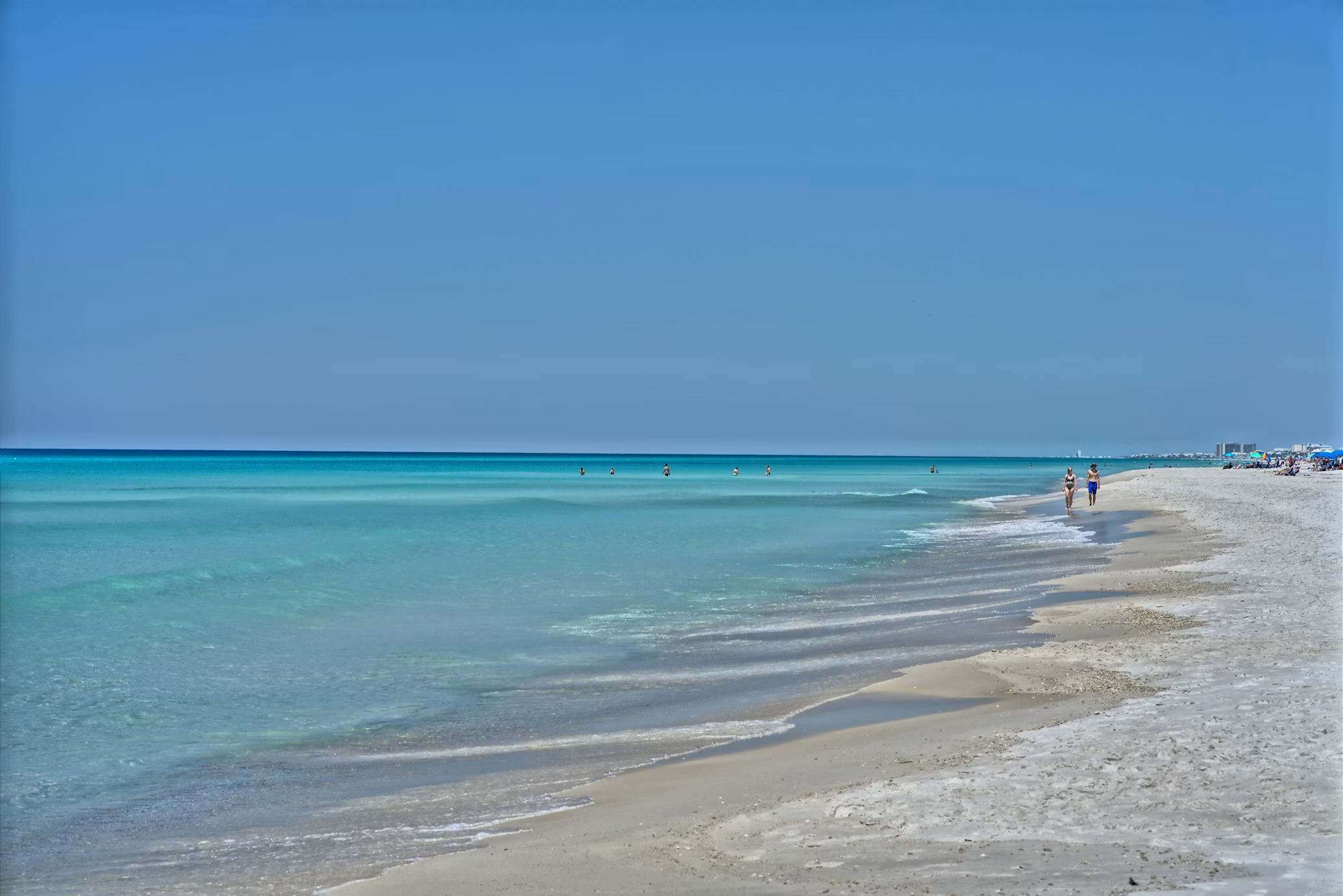
Florida — the beach snowbird experience. The Gulf Coast delivers the warmest water and the best sunsets. The Keys are the southernmost you can get in the continental US. The Atlantic coast has the Space Coast and the preserved natural areas of the northeast. Florida has the most developed RV resort infrastructure of any state — amenities, activities, and social programming that rival resort hotels. Choose Florida if you want beach access, warm water, and the full resort RV experience.
Planning a snowbird season
When to book
The most important advice about snowbirding: book early. The best sites at the best parks in all three states fill up 6–12 months in advance for the peak winter season — December through March. If you're planning a first snowbird season, start making calls and reservations in the spring for the following winter.
Walk-in availability in December at popular parks in Yuma, the Rio Grande Valley, or Naples is essentially nonexistent. The parks that have last-minute availability in January are available for a reason.
How long to stay
Two weeks gives you a taste. Six weeks gives you a real experience. Three to five months is a full snowbird season and the duration that most consistent snowbirders settle into after their first few years.
The longer you stay, the better the economics. Monthly rates at winter RV parks are significantly lower per night than weekly rates, which are lower than nightly rates. A five-month stay at a quality Arizona resort can be done for $1,200–$2,000 per month depending on the park and the site.
What to budget
A reasonable monthly budget for a comfortable snowbird season:
This compares favorably to the full cost of maintaining a northern home through winter — heating, insurance, maintenance, and the general expense of cold-weather living.
Health insurance and medical access
One of the practical concerns that keeps people from their first snowbird season longer than it should. The reality: all three snowbird states have excellent medical infrastructure in the areas where snowbirds concentrate. The Tucson, Phoenix, Rio Grande Valley, Naples, and Fort Myers areas all have full hospital systems, specialist access, and medical facilities that see winter visitors as a core part of their patient base.
Check your health insurance for out-of-network coverage before you go. Medicare covers you anywhere in the US. Most supplemental policies cover you nationally. If you're on a private insurer with narrow networks, call your plan before the season to understand your coverage in the destination state.
Mail and address
Three practical options for snowbirds:
The domicile question is worth researching if you're planning to snowbird consistently — the tax implications of establishing residency in a no-income-tax state are significant for many retirees.
The three states
Arizona — The Classic
Arizona is where serious snowbirding was invented. The combination of dry winter heat, dramatic desert landscapes, and the most established full-timer RV community in North America makes it the first choice for millions of winter visitors every year.
Yuma in the far southwest corner of the state has more RV parks per capita than any city in the country — the approximately 90,000 snowbirds who arrive between October and April nearly triple the city's permanent population. The Quartzsite area an hour to the northeast hosts one of the largest RV gatherings in the world — the January gem and mineral show draws hundreds of thousands of visitors and the surrounding desert fills with RVs in every direction.
Tucson has the best cultural scene of any snowbird destination in Arizona — world-class museums, excellent restaurants, and hiking in the Sonoran Desert that's among the best in the country. Sedona is the most scenically extraordinary winter destination in the state.
See the full guide: Arizona RV Snowbird Guide →
Texas — The Underrated Choice
The Rio Grande Valley at the southern tip of Texas has its own snowbird culture — hundreds of thousands of winter visitors concentrated in the Harlingen, McAllen, and Brownsville area creating a community unlike anything else in the snowbird world. The Valley, as locals call it, delivers the warmest winter temperatures in the continental US outside of South Florida, some of the best birding in North America along the Rio Grande corridor, and a unique borderland culture that makes it genuinely different from Arizona or Florida.
South Padre Island on the Gulf Coast is the beach alternative — wide beaches, warm water into November, and excellent fishing. Big Bend National Park in the west is the winter hiking destination — the desert blooms in late winter and the crowds that define summer are absent.
See the full guide: Texas RV Snowbird Guide →
Florida — The Beach Experience
Florida snowbirding is the most diverse of the three states — the Gulf Coast beaches from Naples to Fort Myers to Sarasota deliver the warmest water and the best sunsets. The Florida Keys are the southernmost you can get in the continental US. The Space Coast on the Atlantic side has the Kennedy Space Center and preserved natural areas. The panhandle is the quietest and most affordable section.
Florida has the most developed RV resort infrastructure in the country — amenity-rich parks with pools, clubhouses, pickleball courts, organized activities, and social programming that make the parks destinations in themselves.
See the full guide: Florida RV Snowbird Guide →
What to bring for a snowbird season
A longer stay requires different preparation than a vacation trip.
Medical supplies — bring a full supply of any prescription medications. Getting prescriptions transferred across state lines is manageable but easier if you arrive with a 90-day supply. Bring copies of all medical records and a list of current medications.
Entertainment and hobbies — the days are long and beautiful. Bring whatever you enjoy — books, art supplies, fishing gear, golf clubs, bicycles. The parks and the surrounding areas have activities but the best snowbirders come with their own interests.
Food storage — you're cooking most meals at home for several months. A well-stocked pantry, a good instant pot, and familiarity with the local grocery options makes the food situation excellent.
Comfortable outdoor furniture — you will be sitting outside a lot. A good set of outdoor chairs, a shade structure, and a comfortable outdoor space transforms your site from a parking spot into a home.
The social side
The snowbird RV community is one of the most welcoming social environments you'll encounter. The shared experience of having made the same unusual life choice creates immediate common ground with every neighbor.
Most winter RV parks have organized social activities — potluck dinners, card games, dance nights, craft groups, and organized day trips. The activity boards in the clubhouse are worth reading on your first morning. The people who engage with the community are the ones who come back year after year.
The friendships formed over a snowbird season — people you see for five months every winter for a decade — are among the most consistent and valued relationships that long-term snowbirders describe.
Gear for snowbird season
A longer stay changes what matters in your rig.
Bottom Line
The first snowbird season is always the hardest — the logistics, the planning, the uncertainty about whether you'll like it. Almost everyone who does a full first season comes back the following year.
The combination of warm weather, outdoor activity, genuine community, and the financial sense it makes for most retirees creates a winter lifestyle that's genuinely better than the alternative. The people who snowbird consistently don't talk about missing winter. They talk about not knowing why they waited so long.
Pick a state. Book a park. Point the rig south in October.
Explore each state in depth:
Lorem ipsum dolor sit amet consectetur adipiscing eli mattis sit phasellus mollis sit aliquam sit nullam.