Subscribe to our newsletter today
Lorem ipsum dolor sit amet consectetur adipiscing eli mattis sit phasellus mollis sit aliquam sit nullam.
Complete guide to Moab, Utah for RV travelers — Arches and Canyonlands, mountain biking, whitewater rafting, Corona Arch, Fisher Towers, Natural Bridges, restaurants, and campgrounds.
Venenatis sollicitudin posuere elit consequat et enim. Neque tortor amet dictum tempor. Leo facilisis aliquet viverra scelerisque eleifend viverra est. At massa erat vel amet enim laoreet dictum pellentesque. Urna cursus quam pulvinar tellus. Duis fermentum nibh volutpat morbi. Et ac sed ultricies ut nunc sodales lectus.
Et urna ac et maecenas fusce amet. Nibh nec commodo massa sed. Tincidunt porttitor in pharetra egestas sit neque ac lacus. Amet a nunc et cum. Odio at volutpat volutpat in leo eget ipsum diam elementum. Erat magna arcu orci lorem senectus orci fringilla. Tincidunt metus nisl vitae maecenas pretium aliquet.
Quis faucibus massa sit egestas. Sit fermentum est ac pulvinar et sagittis sed sit ut. Quis faucibus aenean nibh vestibulum enim mi sit. Sollicitudin ultrices ultrices in ipsum urna fringilla massa leo. Sapien ultricies vitae rhoncus molestie purus. Urna urna dolor euismod porttitor et. Magna adipiscing dictum et adipiscing mollis feugiat.

Quis faucibus massa sit egestas. Sit fermentum est ac pulvinar et sagittis sed sit ut. Quis faucibus aenean nibh vestibulum enim mi sit. Sollicitudin ultrices ultrices in ipsum urna fringilla massa leo. Sapien ultricies vitae rhoncus molestie purus. Urna urna dolor euismod porttitor et. Magna adipiscing dictum et adipiscing mollis feugiat.
Cursus curabitur euismod vel fermentum sapien non dolor odio vel. Tortor lectus mauris in praesent a tincidunt nam. In aenean odio aliquet pretium viverra elit quis magna. Eget ut risus posuere velit purus nisi nec sollicitudin. Tellus enim interdum neque sit vestibulum lacus. Nam pulvinar a lectus justo aliquet integer amet.
“Sed id mi eget urna facilisis pharetra nunc viverra est at magna maximus consectetur sed nec maximus augue aliquam commodo sem eu.”
Cursus curabitur euismod vel fermentum sapien non dolor odio vel. Tortor lectus mauris in praesent a tincidunt nam. In aenean odio aliquet pretium viverra elit quis magna. Eget ut risus posuere velit purus nisi nec sollicitudin. Tellus enim interdum.
Sed non quis tellus velit orci. Quam sed mauris elementum tempor viverra. Luctus semper risus ipsum id diam praesent. Pretium eget mauris ultrices curabitur sed sem amet. Erat nulla habitant in mattis massa mi adipiscing ullamcorper condimentum. Erat quisque integer tincidunt ac amet tempor vulputate tristique.
Sed non quis tellus velit orci. Quam sed mauris elementum tempor viverra. Luctus semper risus ipsum id diam praesent. Pretium eget mauris ultrices curabitur sed sem amet. Erat nulla habitant in mattis massa mi adipiscing ullamcorper condimentum. Erat quisque integer tincidunt ac amet tempor vulputate tristique.
Sed non quis tellus velit orci. Quam sed mauris elementum tempor viverra. Luctus semper risus ipsum id diam praesent. Pretium eget mauris ultrices curabitur sed sem amet. Erat nulla habitant in mattis massa mi adipiscing ullamcorper condimentum.
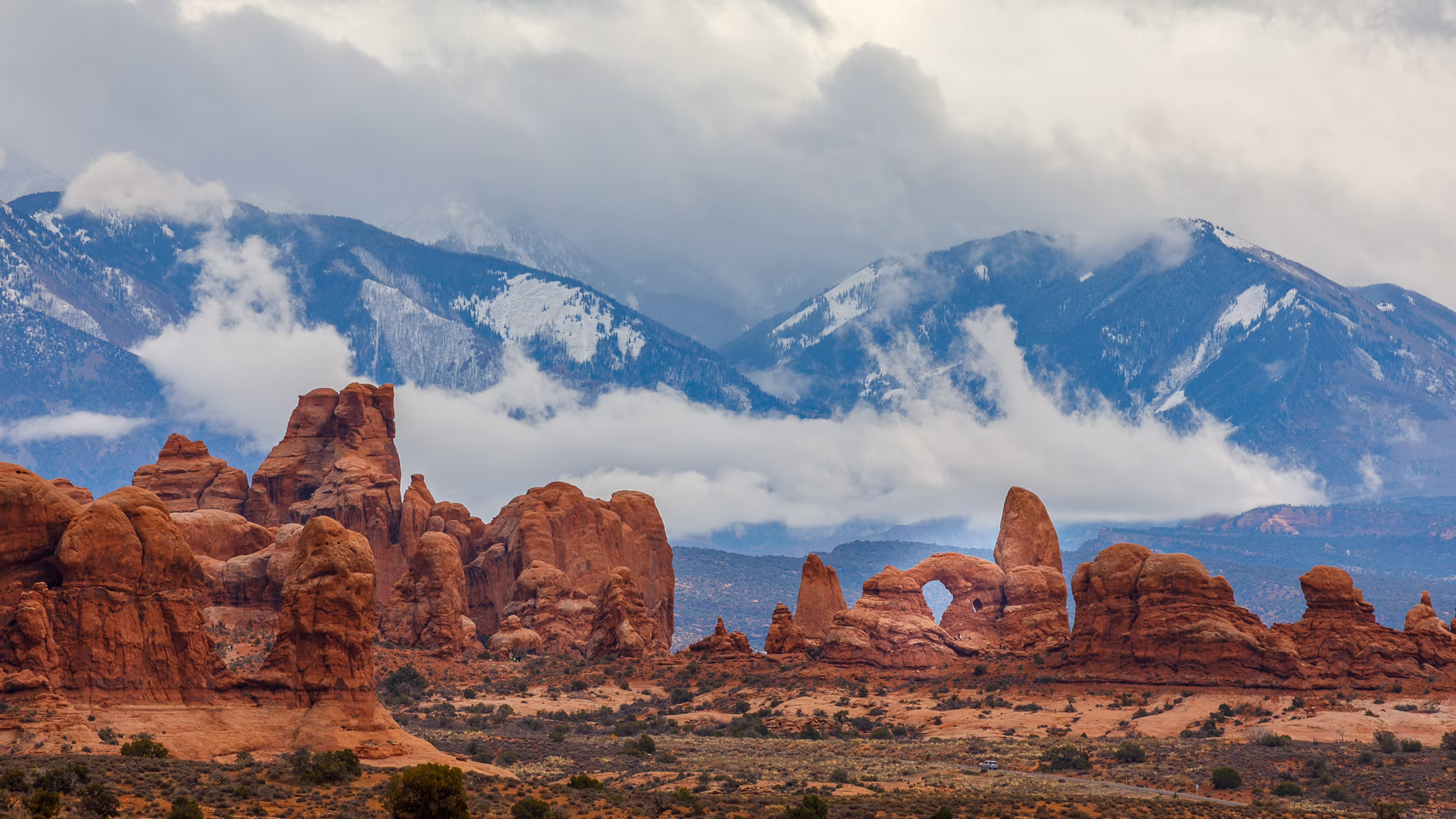
Moab sits in a canyon carved by the Colorado River in the high desert of southeastern Utah. Red rock walls rise on both sides of the town. The La Sal Mountains — snowcapped well into summer — frame the eastern horizon. Two of the most dramatic national parks in the country are within 45 minutes in either direction.
And that's before you get to everything else.
Moab has developed into one of the great outdoor adventure towns in the American West — mountain biking trails that draw riders from around the world, world-class whitewater on the Colorado and Green Rivers, off-road 4WD routes through canyon country, and enough hiking to fill a month without repeating a trail. The national parks are the headliners but Moab itself is a destination.
Here's everything worth doing.
Getting there with an RV
Moab sits on US-191 in southeastern Utah. The main approaches are from the north via I-70 through Green River or from the south via US-191 from Monticello. Both are paved and handle all RV sizes.
From the north via I-70: The most common approach from Salt Lake City or Denver. Turn south on US-191 at Crescent Junction — the red rock scenery begins immediately.
From the south via Monticello: A longer but spectacular approach through Cedar Mesa country passing Natural Bridges National Monument — a worthwhile detour covered below.
The town of Moab itself has multiple RV parks with full hookups, easy access to restaurants and supplies, and large parking areas for big rigs.
The National Parks
Moab is the gateway to two of Utah's five national parks. Both deserve their own visits — and both have dedicated guides on this site.
Arches National Park — 5 miles north of Moab on US-191. More than 2,000 natural sandstone arches including Delicate Arch, the most recognized geological formation in Utah. Timed entry required April through October.
Best Things To Do at Arches National Park with an RV →
Canyonlands National Park — 32 miles northwest of Moab via Highway 313. Island in the Sky district sits on a mesa 1,000 feet above the confluence of the Colorado and Green Rivers. Mesa Arch at sunrise is one of the great photography experiences in the Southwest.
Best Things To Do at Canyonlands National Park with an RV →
Mountain biking
Moab is one of the premier mountain biking destinations in the world. The slickrock terrain — smooth sandstone with extraordinary traction — creates riding conditions found nowhere else. Trails range from beginner-friendly jeep roads to technical expert lines that draw professional riders from around the globe.
Slickrock Bike Trail The trail that put Moab on the mountain biking map. A 12-mile loop on bare sandstone with steep rollers and technical sections that challenge even strong riders. The practice loop near the trailhead is a good calibration for whether the main trail is appropriate for your skill level. Not for beginners — but the most famous mountain bike trail in the country for a reason.
Klondike Bluffs A more accessible option north of town with good technical riding and views of Arches National Park from the trail. Lower consequence than Slickrock with similar desert scenery. Good intermediate option.
Bar M Loop An easy 8-mile loop on jeep roads north of town. The most accessible mountain biking in the Moab area — suitable for riders of all levels. The views across the desert are excellent and the riding is manageable for anyone comfortable on a bike.
Amasa Back An advanced trail with significant elevation gain and technical canyon rim sections with exposure. The views from the top looking down into the Colorado River gorge are extraordinary. Experienced riders only.
Bike rentals: Multiple outfitters in Moab rent full-suspension bikes and hardtails by the day. Chile Pepper Bike Shop and Poison Spider Bicycles are both well-regarded for rentals and trail advice.
Whitewater rafting
The Colorado River runs directly through Moab and the surrounding canyon country offers rafting experiences ranging from mellow flatwater floats to serious class IV whitewater.
Colorado River — Daily and Half-Day Trips The section of the Colorado River through Fisher Towers and Ida Gulch above Moab offers flatwater and class II-III rafting through dramatic red canyon scenery. Half-day and full-day trips available — suitable for families and first-time rafters. Multiple outfitters run daily trips from Moab.
Cataract Canyon — The serious whitewater The section of the Colorado River through Cataract Canyon in Canyonlands National Park contains some of the biggest whitewater in North America — class IV and V rapids in high water season. Multi-day trips from 3 to 6 days run through the canyon to Lake Powell. One of the classic river trips in the American West. Oars, NAVTEC Expeditions, and Holiday River Expeditions all run Cataract Canyon trips.
Green River — Labyrinth Canyon A multi-day flatwater float through Labyrinth Canyon — towering canyon walls, no motors, no crowds, and some of the most peaceful river camping anywhere. 3–5 day self-guided trips by canoe or kayak. Requires a shuttle from Green River, Utah.
4WD and off-road
The canyon country around Moab has some of the most famous 4WD routes in the country. These are for capable vehicles with good clearance — not for standard passenger cars or most RVs. Leave the rig at camp and use your tow vehicle.
Hell's Revenge A slickrock 4WD route through dramatic canyon terrain with technical obstacles and exposure. One of the most famous off-road routes in Utah. High clearance 4WD required — lockers recommended on harder lines.
Fins and Things A mix of slickrock and sand wash driving with views of Arches National Park and the La Sal Mountains. More accessible than Hell's Revenge but still requires high clearance.
White Rim Road The 100-mile dirt road circling Island in the Sky mesa in Canyonlands National Park. Typically done as a 3-day trip — backcountry permit required. The definitive Moab 4WD experience. High clearance 4WD with lockers recommended.
Rental options: Multiple companies in Moab rent equipped Jeeps and 4WD vehicles by the day. Farabee Jeep Rentals and Moab Jeep Rentals are both reliable options if you don't have a capable tow vehicle.
Hiking beyond the parks
Corona Arch Difficulty: Moderate Distance: 3 miles round trip
One of the most impressive arches in the Moab area and it's not in Arches National Park — it's on BLM land accessible from Highway 279 along the Colorado River. Corona Arch has a 140-foot span and you can walk directly under it. The approach trail has one section requiring a short ladder and fixed rope. Significantly less crowded than anything inside Arches and arguably just as spectacular.
Fisher Towers Difficulty: Moderate Distance: 4.4 miles round trip
A trail through one of the most dramatic landscapes in Utah — tall red sandstone towers rising from the desert floor with the La Sal Mountains behind them. John Ford filmed westerns here. The towers are otherworldly at sunset when the light turns them deep crimson. 26 miles northeast of Moab on Highway 128.
Dead Horse Point State Park Difficulty: Easy to moderate
A Utah State Park — not a national park — but with views that rival anything in Canyonlands or Arches. The mesa overlooks the Colorado River 2,000 feet below in a classic horseshoe bend. The view of the river cutting through the canyon from the overlook is one of the great panoramic views in the American West. The park has an excellent campground with full hookups — often easier to book than NPS sites.
Book on Reserve America → [affiliate link]
Negro Bill Canyon Difficulty: Easy Distance: 4 miles round trip
A pleasant canyon walk along a seasonal stream to Morning Glory Natural Bridge — one of the largest natural bridges in the country. The canyon is shaded and cool compared to the exposed slickrock terrain and the streamside vegetation is a contrast to the surrounding desert.
Climbing
Moab and the surrounding canyon country is one of the premier rock climbing destinations in the country. The crack climbing on Wingate sandstone in Indian Creek Canyon south of Moab is considered among the best crack climbing in the world — drawing climbers from around the globe.
Casual visitors can watch climbers on the towers visible from Fisher Towers Road and along the Colorado River corridor on Highway 279. The Hand — a famous splitter crack at Indian Creek — is visible from the road and watching skilled climbers work a sustained 5.11 hand crack is worth the detour.
Moab Cliffs and Crags offers guided climbing for beginners and intermediates with equipment provided.
The Colorado River Scenic Byway — Highway 128
Highway 128 northeast from Moab follows the Colorado River through one of the most scenic canyon drives in Utah. The 44-mile route passes Fisher Towers, Castle Valley, and the Professor Valley before connecting to I-70. The Castle Valley turnoff leads to the iconic view of Castleton Tower — a 400-foot sandstone monolith that appears in countless photographs and films.
RV-friendly for the full length. Drive it in the late afternoon when the canyon walls turn gold.
The La Sal Mountains
The La Sal Mountains rise to 12,721 feet directly east of Moab and are visible from virtually every viewpoint in the area. The La Sal Mountain Loop Road — a 63-mile scenic drive — climbs from the desert floor through pinyon-juniper forest, aspen groves, and high alpine meadows with views back across canyon country.
In summer the La Sals are 20–30°F cooler than Moab — a genuine escape from desert heat. In fall the aspen groves turn gold against the red canyon backdrop creating one of the great color contrasts in Utah.
The road has sections that are not recommended for larger RVs — leave the rig at camp and drive the loop in your tow vehicle.
Bonus: Natural Bridges National Monument
Natural Bridges National Monument sits 45 miles southwest of Moab via Highway 191 and Highway 95 — one of the most scenic drives in Utah passing through Cedar Mesa country. The monument protects three of the largest natural bridges in the world: Sipapu, Kachina, and Owachomo.
Natural bridges are formed by water erosion from below — distinct from arches which form from wind and water erosion from above. The three bridges in the monument represent different stages of the same formation process: Sipapu is mature and massive, Kachina is young and thick, Owachomo is ancient and thin.
Bridge View Drive — a 9-mile one-way loop past all three bridges with overlooks and short hiking trails descending to each one. The loop road handles most RVs. Check current size restrictions at the monument entrance — the road has tight sections and some pullouts are narrow for longer rigs.
Owachomo Bridge — the easiest to reach. A 0.4-mile round trip trail to the base of a 106-foot bridge that's only 9 feet thick at its narrowest — ancient and fragile looking. One of the most delicate natural stone formations in the Southwest.
Sipapu Bridge — the largest of the three, with a 268-foot span and a 220-foot height. Reached by a 1.2-mile round trip trail with some steep sections and wooden ladders. The scale of the bridge from below is extraordinary.
The campground at Natural Bridges is small, first-come-first-served, and sits in a pinyon-juniper forest with dark skies that rival Bryce Canyon. Natural Bridges was the first International Dark Sky Park designated in the world — the night sky here is exceptional.
The monument is worth an overnight or at minimum a half-day stop on the route between Moab and the Four Corners area. Most visitors drive past without stopping. Don't be most visitors.
Book on Recreation.gov → [affiliate link]
Where to eat in Moab
Moab Brewery — the best beer in town, solid pub food, large space that handles groups. The patio fills fast on summer evenings.
Moab Diner — the breakfast institution. Huevos rancheros, big portions, reasonable prices. Get there early on weekends.
Desert Bistro — the best dinner in Moab in a historic building with a menu that punches well above a small desert town. Reservations recommended in peak season.
Quesadilla Mobilla — a food truck turned brick-and-mortar that makes some of the best quesadillas you'll have anywhere. Casual, cheap, excellent.
Milt's Stop and Eat — a classic American burger stand that's been operating since 1954. The burgers are excellent and the milkshakes are the right call after a long day on the trail.
Where to stay in Moab
Moab Valley RV Resort — the best full-hookup RV park in town. Clean facilities, large pull-through sites, pool, and easy access to all Moab trailheads.
Book on Campspot → [affiliate link]
Canyonlands Campground — centrally located in town, full hookups, walking distance to restaurants. Good budget option.
Book on Campspot → [affiliate link]
Dead Horse Point State Park — 32 miles from Moab but worth it for the views and the full-hookup sites. Often easier to book than NPS campgrounds.
Book on Reserve America → [affiliate link]
Practical notes
Summer heat is real. June through August temperatures regularly exceed 100°F. All significant outdoor activity should happen before 10am or after 5pm. Carry more water than you think you need — desert dehydration is faster than most people expect.
Timed entry at Arches. Arches National Park requires a timed entry reservation April through October. Book on Recreation.gov before you arrive.
Moab is busy. Peak season from spring through fall brings serious crowds. The town's infrastructure — roads, parking, campgrounds — can feel strained on summer weekends. Book everything in advance and consider visiting in shoulder season: May or September are excellent.
Starlink is excellent in Moab. Cell coverage is good in town and along the main canyon drives. It drops out in the deeper canyon sections and backcountry.
Gear for Moab
Part of the Southwest RV Road Trip
Moab is the basecamp for stops four and five on the ultimate Southwest loop.
The Ultimate Southwest RV Road Trip →
Lorem ipsum dolor sit amet consectetur adipiscing eli mattis sit phasellus mollis sit aliquam sit nullam.