Subscribe to our newsletter today
Lorem ipsum dolor sit amet consectetur adipiscing eli mattis sit phasellus mollis sit aliquam sit nullam.
California wine country RV road trip — Santa Ynez, Paso Robles, Napa, and Sonoma with RV parking strategy, Harvest Hosts tips, best times to visit, and a complete 10-day itinerary.
Venenatis sollicitudin posuere elit consequat et enim. Neque tortor amet dictum tempor. Leo facilisis aliquet viverra scelerisque eleifend viverra est. At massa erat vel amet enim laoreet dictum pellentesque. Urna cursus quam pulvinar tellus. Duis fermentum nibh volutpat morbi. Et ac sed ultricies ut nunc sodales lectus.
Et urna ac et maecenas fusce amet. Nibh nec commodo massa sed. Tincidunt porttitor in pharetra egestas sit neque ac lacus. Amet a nunc et cum. Odio at volutpat volutpat in leo eget ipsum diam elementum. Erat magna arcu orci lorem senectus orci fringilla. Tincidunt metus nisl vitae maecenas pretium aliquet.
Quis faucibus massa sit egestas. Sit fermentum est ac pulvinar et sagittis sed sit ut. Quis faucibus aenean nibh vestibulum enim mi sit. Sollicitudin ultrices ultrices in ipsum urna fringilla massa leo. Sapien ultricies vitae rhoncus molestie purus. Urna urna dolor euismod porttitor et. Magna adipiscing dictum et adipiscing mollis feugiat.

Quis faucibus massa sit egestas. Sit fermentum est ac pulvinar et sagittis sed sit ut. Quis faucibus aenean nibh vestibulum enim mi sit. Sollicitudin ultrices ultrices in ipsum urna fringilla massa leo. Sapien ultricies vitae rhoncus molestie purus. Urna urna dolor euismod porttitor et. Magna adipiscing dictum et adipiscing mollis feugiat.
Cursus curabitur euismod vel fermentum sapien non dolor odio vel. Tortor lectus mauris in praesent a tincidunt nam. In aenean odio aliquet pretium viverra elit quis magna. Eget ut risus posuere velit purus nisi nec sollicitudin. Tellus enim interdum neque sit vestibulum lacus. Nam pulvinar a lectus justo aliquet integer amet.
“Sed id mi eget urna facilisis pharetra nunc viverra est at magna maximus consectetur sed nec maximus augue aliquam commodo sem eu.”
Cursus curabitur euismod vel fermentum sapien non dolor odio vel. Tortor lectus mauris in praesent a tincidunt nam. In aenean odio aliquet pretium viverra elit quis magna. Eget ut risus posuere velit purus nisi nec sollicitudin. Tellus enim interdum.
Sed non quis tellus velit orci. Quam sed mauris elementum tempor viverra. Luctus semper risus ipsum id diam praesent. Pretium eget mauris ultrices curabitur sed sem amet. Erat nulla habitant in mattis massa mi adipiscing ullamcorper condimentum. Erat quisque integer tincidunt ac amet tempor vulputate tristique.
Sed non quis tellus velit orci. Quam sed mauris elementum tempor viverra. Luctus semper risus ipsum id diam praesent. Pretium eget mauris ultrices curabitur sed sem amet. Erat nulla habitant in mattis massa mi adipiscing ullamcorper condimentum. Erat quisque integer tincidunt ac amet tempor vulputate tristique.
Sed non quis tellus velit orci. Quam sed mauris elementum tempor viverra. Luctus semper risus ipsum id diam praesent. Pretium eget mauris ultrices curabitur sed sem amet. Erat nulla habitant in mattis massa mi adipiscing ullamcorper condimentum.
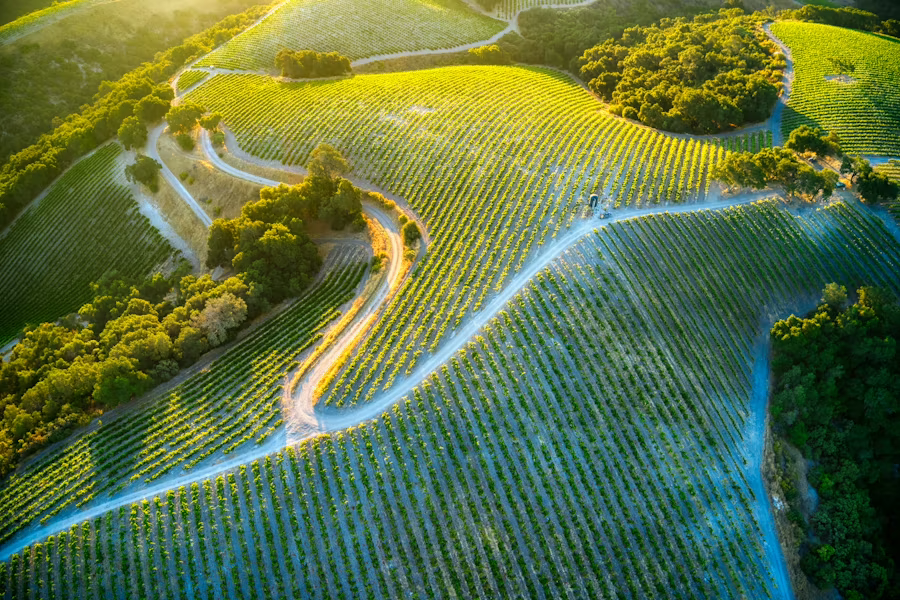
California produces more wine than any other state in the country — about 85 percent of all American wine comes from California vineyards. The three regions covered in this guide represent the full range of what California wine country looks like: a Danish village in the Santa Ynez Mountains, a laid-back cowboy wine town on the central coast, and the most famous wine destination in the Western Hemisphere in the Napa Valley.
They're connected by Highway 101 running the length of the state — a natural wine country road trip that pairs perfectly with the Big Sur coast to the west and the Sierra Nevada to the east.
The route
Santa Ynez Valley → Paso Robles → Monterey → San Francisco → Napa Valley → Sonoma Valley
Total driving distance: approximately 500 miles from Santa Ynez to Sonoma. Recommended time: 7–10 days. Ten days lets you actually taste wine rather than just drive between regions.
The route runs north on Highway 101 — California's main coastal highway — connecting all three regions with Big Sur and Monterey in between.
The RV reality in wine country
This needs addressing before anything else because it shapes every decision about how to experience these regions.
Winery parking lots are not designed for RVs. Most California wineries have parking designed for passenger cars and small SUVs. Large RVs — anything over 30 feet — will struggle to navigate the narrow driveways, tight turnarounds, and small parking areas at most wineries. Some wineries have gravel lots that are genuinely problematic for leveling and maneuvering.
The solution that works for every region:
Base camp your RV at a campground or RV park outside the winery zones. Use one of these options for winery hopping:
This is not a limitation — it's actually the better approach. You can drink at the tastings without worrying about driving, and you come back to your RV at the campground rather than trying to navigate a large rig on narrow wine roads after an afternoon of tasting.
Harvest Hosts is particularly valuable in wine country. The membership program allows self-contained RVers to park overnight at member wineries in exchange for a purchase. Several wineries in all three regions participate. Check the Harvest Hosts app for current member wineries before your visit.
Book on Harvest Hosts → [affiliate link]
Best times to visit
Harvest season — September and October — the best time to visit any California wine region. The vineyards are full and turning color, harvest activity is visible in the vineyards, and the wineries are releasing new vintages. The weather is warm and stable. This is the most popular time — book campgrounds and winery reservations well in advance.
Spring — March through May — the vineyards are green and flowering, the weather is ideal, and the crowds are lighter than fall. Good value for campgrounds and tastings.
Summer — June through August — the busiest season especially in Napa. Temperatures can be hot in the valleys. Book everything well in advance.
Winter — November through February — the quietest season. Many small wineries close or reduce hours. The valleys are green from winter rain and the light is soft. The best time for uncrowded tasting room experiences.
Santa Ynez Valley
The Santa Ynez Valley sits in the Santa Ynez Mountains 30 miles north of Santa Barbara — a series of east-west valleys carved by the Santa Ynez River. The region produces exceptional pinot noir and chardonnay — the cool Pacific fog that rolls through the mountain passes in the morning keeps temperatures lower than the central coast wine regions to the north.
The 2004 film Sideways was filmed here and triggered a decade-long boom in pinot noir tourism. The effect on the region's reputation was significant and permanent.
See the full Santa Ynez guide: Santa Ynez Valley Wine Country RV Guide →
Paso Robles
Paso Robles sits halfway between Los Angeles and San Francisco on Highway 101 — the most central and most accessible wine region on the California coast. The east side of the region grows big cabernet sauvignon in a warm inland climate. The west side — the Willow Creek District and the Templeton Gap — produces exceptional Rhône varieties in a cooler coastal-influenced zone.
Paso is the least pretentious of the three California wine regions and the most RV-friendly — the downtown is flat and easy to navigate, the wineries on the east side have larger parking areas than most Napa estates, and the overall vibe is relaxed cowboy country rather than luxury hospitality.
See the full Paso Robles guide: Paso Robles Wine Country RV Guide →
The Central Coast connection
Between Santa Ynez and Paso Robles and between Paso Robles and Napa, the route follows Highway 1 and Highway 101 through some of the best scenery on the California coast.
Santa Barbara — 30 miles south of Santa Ynez. The American Riviera — Spanish colonial architecture, excellent beaches, and a downtown State Street wine tasting scene with over 30 tasting rooms within walking distance. Worth a night before heading into the wine country.
Big Sur and Monterey — between Paso Robles and the Bay Area on Highway 1. The most dramatic coastal drive in the country connects the two wine regions naturally. See the full Big Sur guide for details.
Big Sur & Highway 1 RV Road Trip →
Napa and Sonoma
Napa Valley is the most famous wine destination in the Western Hemisphere — 30 miles of valley floor planted with cabernet sauvignon, chardonnay, and merlot between the Mayacamas and Vaca Mountains north of San Francisco. The wine is extraordinary, the restaurants are excellent, and the landscape in harvest season is one of the most beautiful agricultural scenes in the country.
Sonoma Valley and the broader Sonoma County wine region to the west of Napa is larger, more varied, and generally more relaxed — pinot noir in the Russian River Valley, zinfandel in the Dry Creek Valley, and everything from sparkling wine to cabernet in between.
See the full guide: Napa & Sonoma Wine Country RV Guide →
Planning the full route
A 10-day California Wine Country RV itinerary:
Days 1–2: Santa Ynez Valley Base camp near Solvang or Buellton. Tasting rooms in Los Olivos and the Santa Rita Hills on day one. Solvang Danish village and the Santa Ynez wine road on day two.
Day 3: Santa Barbara Drive south for a day in Santa Barbara — beaches, State Street tasting rooms, and the mission. One of the best small cities in California.
Days 4–5: Paso Robles North on Highway 101. Two days in Paso — east side cabernet on day one, west side Rhône varieties on day two. Downtown Paso Robles for dinner both nights.
Day 6: Big Sur and Highway 1 The coastal drive north from Paso Robles to Monterey via Highway 1. Stop at Hearst Castle, the elephant seals at Piedras Blancas, and McWay Falls.
Day 7: Monterey to San Francisco North through Carmel, the 17-Mile Drive, and up Highway 1 to the Bay Area. Base camp in Marin County or Petaluma.
Days 8–10: Napa and Sonoma Three days in the North Bay wine country. One day in Napa Valley. One day in Sonoma Valley and Sonoma town. One day in the Russian River Valley or Dry Creek Valley.
Wine country gear and tips
Keeping wine at temperature in your RV A portable wine cooler or the RV refrigerator handles short-term storage. If you're buying cases to take home, keep them in the coolest part of the RV — heat is wine's enemy and summer temperatures in the wine country valleys can be extreme.
Tasting fees Tasting fees have increased significantly across all California wine regions — $30–$50 per person for standard tastings is now common in Napa, $20–$35 in Paso and Santa Ynez. Many wineries require reservations. Budget accordingly and prioritize the wineries that interest you most rather than trying to visit everywhere.
Driving on wine roads The rural roads in all three regions are narrow, winding, and often without shoulders. In a tow vehicle this is manageable. In a large RV it ranges from difficult to impossible on many secondary wine roads. The tow vehicle or rideshare approach is not optional — it's the only practical strategy for getting to the best wineries.
Harvest Hosts The most valuable membership for wine country RV travel. Overnight parking at member wineries in exchange for a purchase — you're literally sleeping in the vineyard. Several excellent wineries in all three regions participate.
Book on Harvest Hosts → [affiliate link]
Gear for wine country
Part of the Ultimate California RV Road Trip
The Ultimate California RV Road Trip → ← coming soon
Explore each region in depth
Lorem ipsum dolor sit amet consectetur adipiscing eli mattis sit phasellus mollis sit aliquam sit nullam.